Use AI to Test a Variation
AI is most useful for testing a specific judgement: if you play this move, does your opponent have a stronger reply? Before the game, choose red or black and a strength. During play, list your candidate moves before checking the hint, then undo to the branching point if you missed something. The AI does not explain the position, but it quickly exposes an unsafe general, an undefended piece, or a short tactical attack.

Choose a Level by the Quality of Reply
Beginner practice sometimes plays a random legal move, which helps while you learn the rules. The casual opponent finishes a game with basic replies. The standard opponent follows the position. The advanced opponent looks deeper and misses fewer tactics. Deep challenge plays at full strength and thinks longer. These levels are not ratings. If you still miss checks or loose pieces often, step down and make your checking routine reliable first.
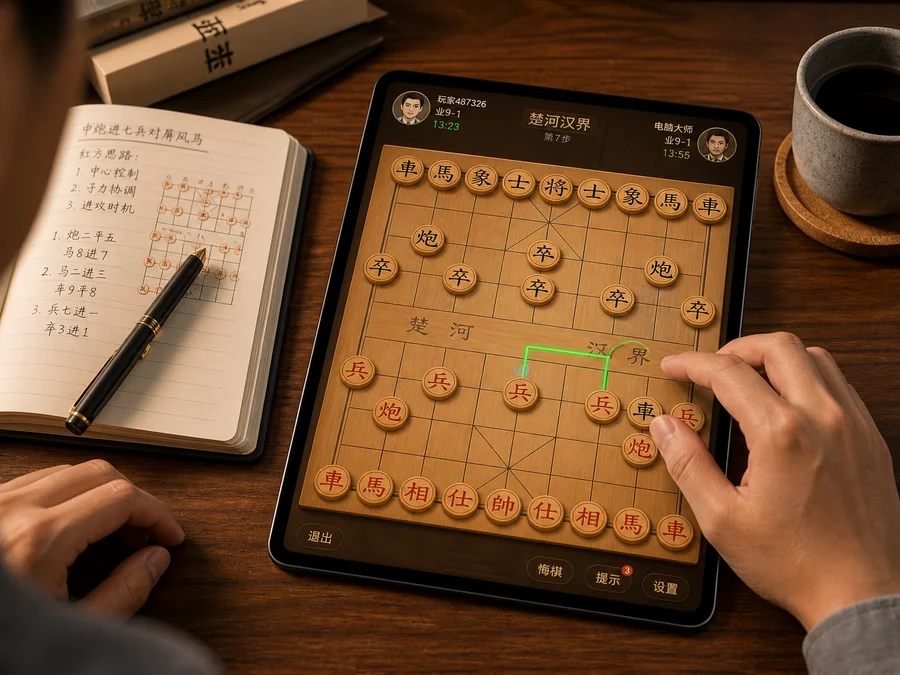
Use Hints to Compare Candidates
Before opening a hint, find two candidate moves and predict the strongest reply to each. After Cannon 2 to 5, for example, account for a normal response such as Horse 8 to 7; before advancing the center soldier, inspect the center file and cannon lines. If the hint suggests something else, do not simply copy it. Decide whether it answers a check, saves a piece, trades material, or gains a tempo, then use undo to compare both branches.
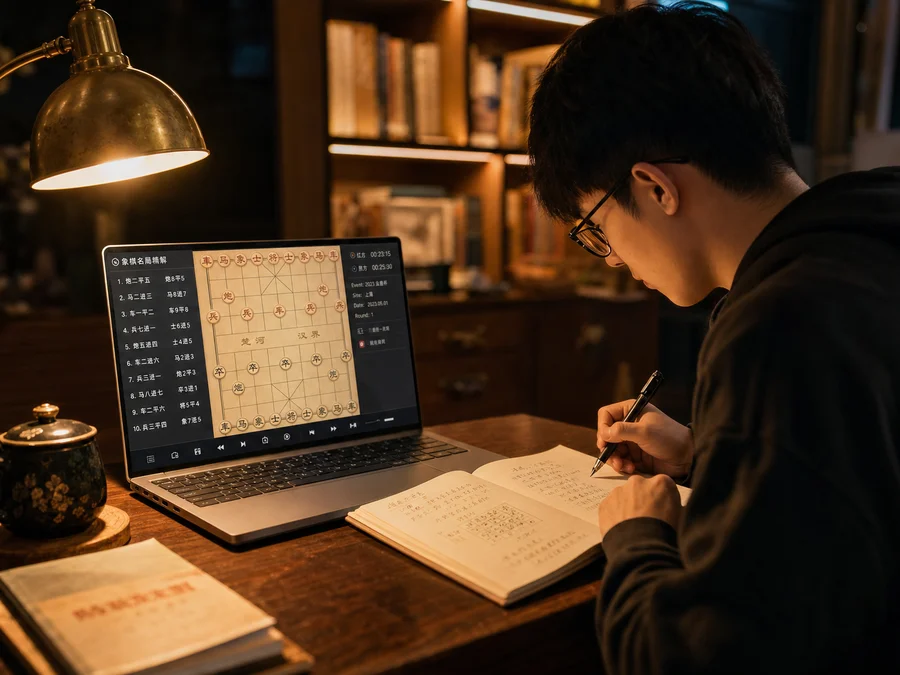
Find the First Mistake in Replay
After the game, replay the moves without trying to grade every turn. Find the first clear decline: an undefended piece was attacked, an exchange lost the initiative, or an open center exposed the general. Stop one move before the mistake, choose two alternatives, and calculate the strongest reply to each. Correcting the earliest bad decision is more useful than studying only the final checkmate.
Multiplefrom beginner practice to deep challenge
2 moveslist candidates before using a hint
1 replypredict at least their strongest response
Firstfind the earliest mistake in replay