Analyze a Xiangqi Position
Set the Position First, Then Ask the Engine
Endgame stages are boards someone else arranged. Here you name the position. Put up a middlegame, an ending, or a ply from a score, read a full-strength engine, and try the branches. When a line holds, stay on this page and play it against multiple AI levels.
Set up, read the lines, then decide whether to play
Start in setup. Take a piece from the tray and drop it on an intersection; tap an existing piece to replace or remove it. You can also paste a FEN, or a string of Chinese or algebraic moves. Both generals must sit in the palace, elephants cannot cross the river, and the side that is not to move cannot already be in check. The page lists each broken rule instead of a single failure.
When the board is legal, start analysis. The sidebar searches at full strength and shows three main lines, the score, depth, and nodes. Tap a ply in a line to jump there. Either side may try a move; undo takes you back to the board you set. Analysis does not weaken itself to the play strength.
To put the judgment on an opponent, play this board, choose red or black, and pick a sidebar strength. Hints and replies follow that level. After the game you can edit the board again, change a few pieces, and analyze without going home to the starting array.
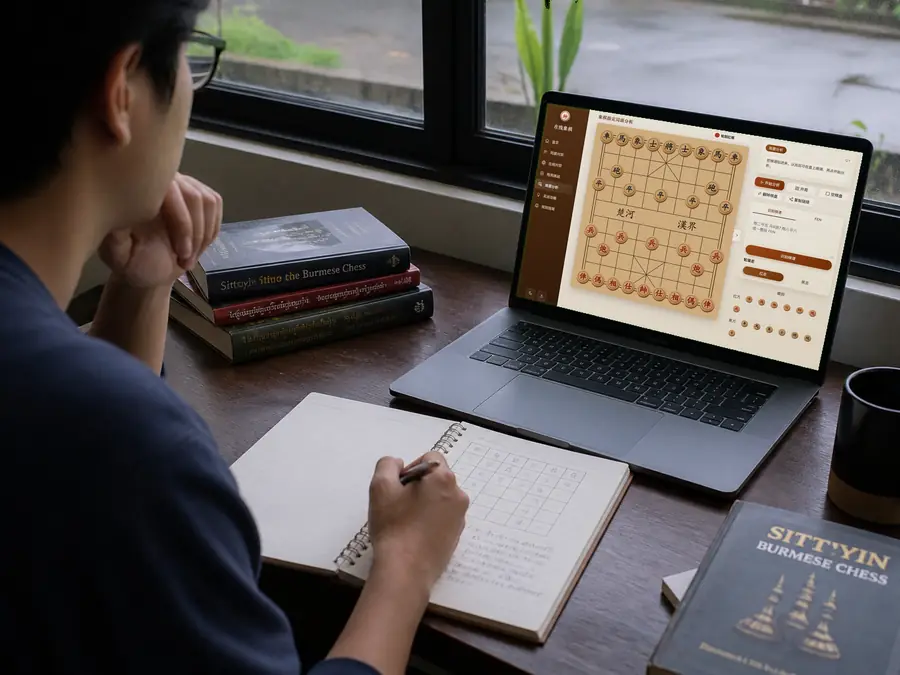
You name the board, not an opening or a stage
The home page starts from the initial array. The endgame campaign is a catalog of mating studies. This page lifts a middlegame, a practical ending, or a ply from a score. A FEN, the piece tray, or a move list can recover the same board so you can keep editing, analyzing, and trying lines on this device.
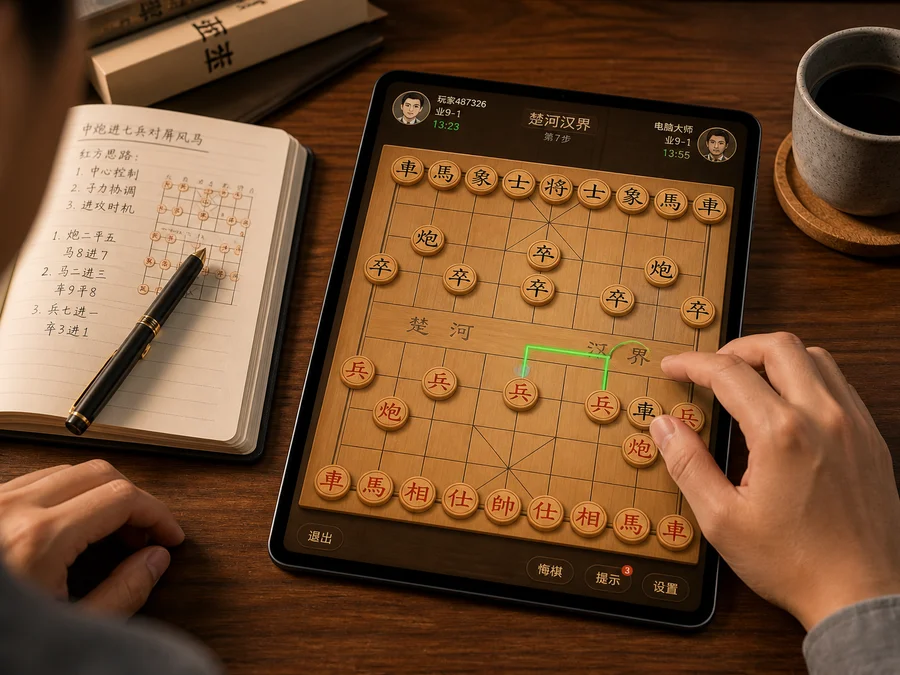
Three lines on the same position
Analysis searches at full strength and does not move for you. The sidebar lists the score, depth, nodes, and three variations. Tap a ply to jump there and try another branch. Hints appear only when you play this board, and they follow the AI level you chose.
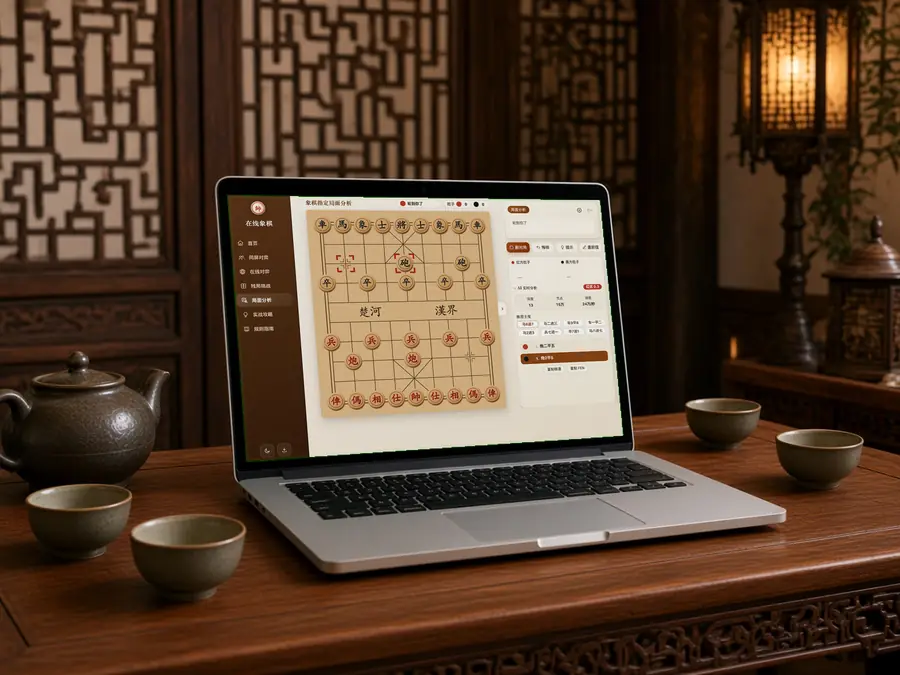
Play that board against AI on this page
Trying moves only answers what the position looks like after a ply. To meet an opponent that replies, you do not take the FEN back to the home page. Play this board starts from the current position, with color and strength chosen here. After the game you can edit again and put a mistimed piece back.
Common Questions
How is this page different from the home AI game and the endgame campaign?
The home page is a full game against AI from the starting array; analysis there is attached to that game. The endgame campaign is prepared stages where you move first as Red and look for the mate. This page lets you specify any legal position: set it up, read three lines, and play this board without leaving. The three entries are not the same job.
Can I use this on a phone or computer, without an account?
Yes. Open this page in a browser to set up and analyze. No account, no app. The position stays in this browser; a refresh usually keeps it. After you clear this site's data there is no account that can restore it.
Where does a FEN come from, and what move formats can I paste?
A FEN writes a 9×10 board as one line of text; many recording tools can copy it. Moves can be Chinese notation such as 炮二平五, or this site's algebraic notation. If the whole paste is actually a FEN, the page asks you to place it on the board instead of playing it as moves.
Why does Analyze refuse some positions?
Analysis only accepts a legal board. A missing general, a general outside the palace, an elephant across the river, too many of one piece, facing generals, or the side that is not to move already in check will stop it. The page names the broken rule so you can move a piece or change the side to move.
Is analysis strength the same as the AI level when I play this board?
No. While you read the position the engine searches at full strength and does not follow the sidebar level, so the three lines are comparable. After you play this board, replies and hints follow the strength you chose, so the same board can be used as practice.
Does playing this board wipe the position I set up?
It does not restart from the opening array. Play this board starts from the position you confirmed. Resign, a finished game, or a new game also return to that board, not to the initial array. To change pieces, edit the board and bring the current position back into setup.
Can I tap a main line, and how do I take back a try?
Yes. Tap a ply in a line and the board jumps there; the engine searches again from that point. While you explore you can undo, step forward, or jump from the move list. After you return to the board you set, the position is still there.
Can I still analyze if the engine fails to load?
The three full lines need Fairy-Stockfish. If it fails to load, playing this board can still use the lighter engine, but the sidebar will not show the same search detail. It switches back when loading finishes. Until then you can keep setting up, or try replies by playing this board.
Compared with the old-book endgame stages, what is this page for?
The old-book stages are for clearing a shape and finding that study's solution. This page is for a concrete board you already have: a missed middlegame ply, an ending you want to check, or a score stopped on one move. Let the engine show the strongest replies, then decide whether to play the variation out.